Chuseok Travel Rush: Hometowns on 5th, Capital on 6th
Key Traffic Patterns During Chuseok Holiday
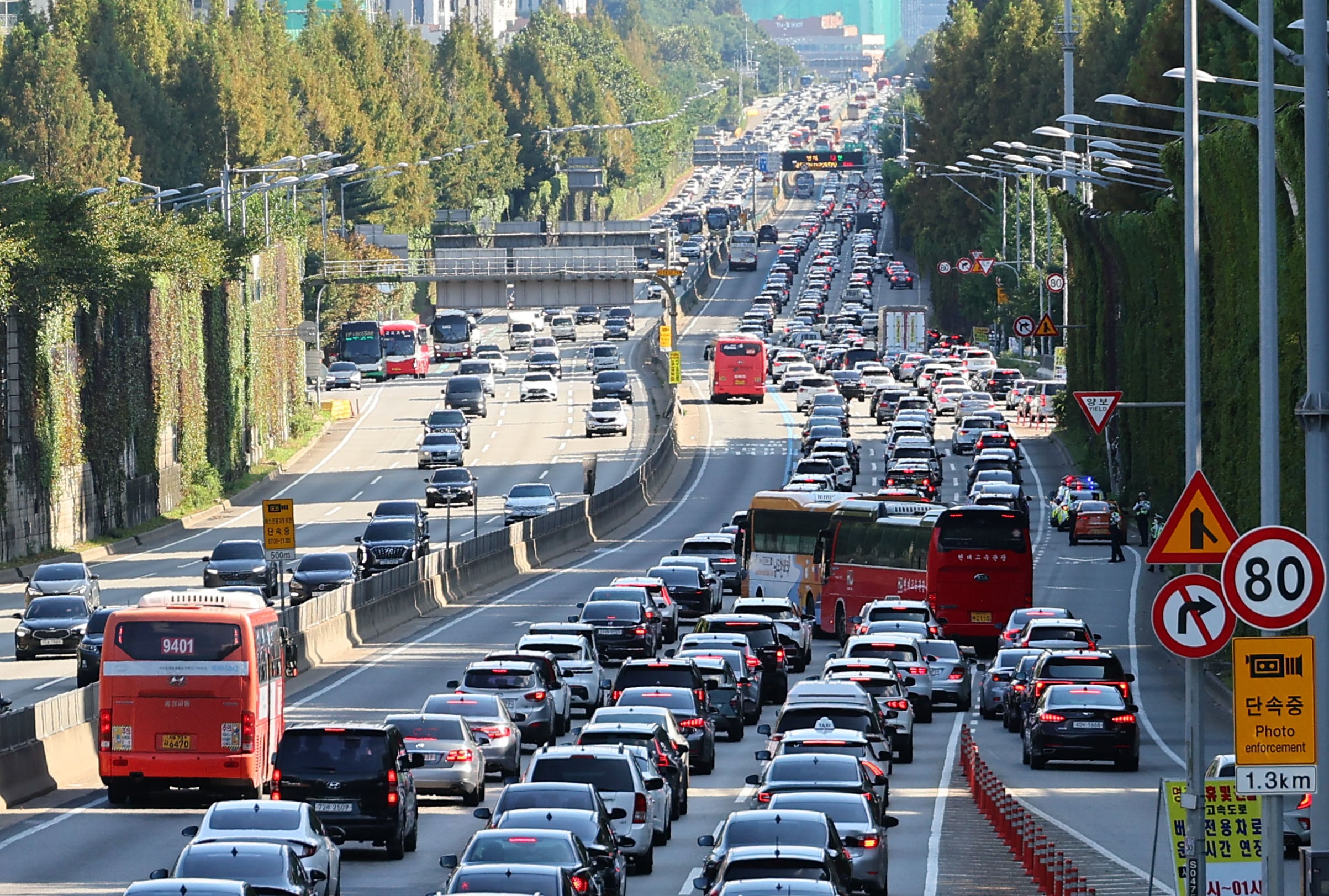
As the Chuseok holiday approaches, traffic congestion is expected to peak on specific days for travelers heading back to their hometowns and those returning to the capital. According to recent forecasts, October 5th is anticipated to be the most congested day for those traveling to their hometowns, while October 6th will see the highest traffic volume for those returning to the capital.
The Ministry of Land, Infrastructure and Transport has reported that a total of 32.18 million people are expected to travel during this year’s Chuseok holiday, marking an 8.2% increase compared to last year. Despite the extended holiday period, the daily average number of travelers is projected to decrease by 2% from the previous year, reaching approximately 7.75 million per day. To manage the increased movement of people, the Ministry has designated the period from October 2nd to 12th as the ‘Special Traffic Measures Period’.
Traveling by Private Vehicles
A significant majority of travelers, around 84.5%, are expected to use private vehicles for their journeys. This trend highlights the continued reliance on personal transportation during major holidays in the country. The Ministry of Land, Infrastructure and Transport has emphasized that travel to hometowns will take the longest on October 5th, with the return journey to the capital being the most challenging on October 6th.
On October 5th, the estimated travel time from Seoul to Busan is expected to be 8 hours and 10 minutes, while the return trip from Busan to Seoul on October 6th could take up to 9 hours and 50 minutes. These figures underscore the potential delays travelers may face during these peak periods.
Increased Traffic Volume on Chuseok Day
Notably, on October 6th, which coincides with Chuseok day, the nationwide traffic volume is expected to reach 6.67 million vehicles, a 2.3% increase compared to last year’s 6.52 million vehicles. This surge in traffic is attributed to the convergence of multiple travel patterns, including those returning to their hometowns, heading back to the capital, and visiting ancestral graves.
To address these challenges, the Ministry of Land, Infrastructure and Transport has identified 274 sections (2,186 km) of expressways and general national roads as congestion-prone areas during the Special Traffic Measures Period. These areas will receive targeted traffic management efforts, including vehicle detour guidance and the operation of 69 sections (294 km) of highway shoulder lanes.
Enhanced Public Transportation Services
In addition to managing road traffic, the Ministry has also announced plans to enhance public transportation services. Bus and rail services will be increased by 15.2% (36,687 additional trips) and 11.9% (2.084 million additional seats), respectively, compared to usual levels. These measures aim to provide more options for travelers who prefer not to use private vehicles or are affected by traffic congestion.
Conclusion
With the Chuseok holiday bringing millions of people on the move, the Ministry of Land, Infrastructure and Transport has implemented comprehensive strategies to manage traffic and ensure smoother travel experiences. From identifying high-traffic areas to increasing public transport capacity, these efforts reflect a proactive approach to handling the demands of one of the busiest travel periods of the year. Travelers are encouraged to plan their journeys carefully and consider alternative routes and transportation options to minimize disruptions.

Post a Comment