Reunion Island: Uncover Its Most Stunning Natural Wonders
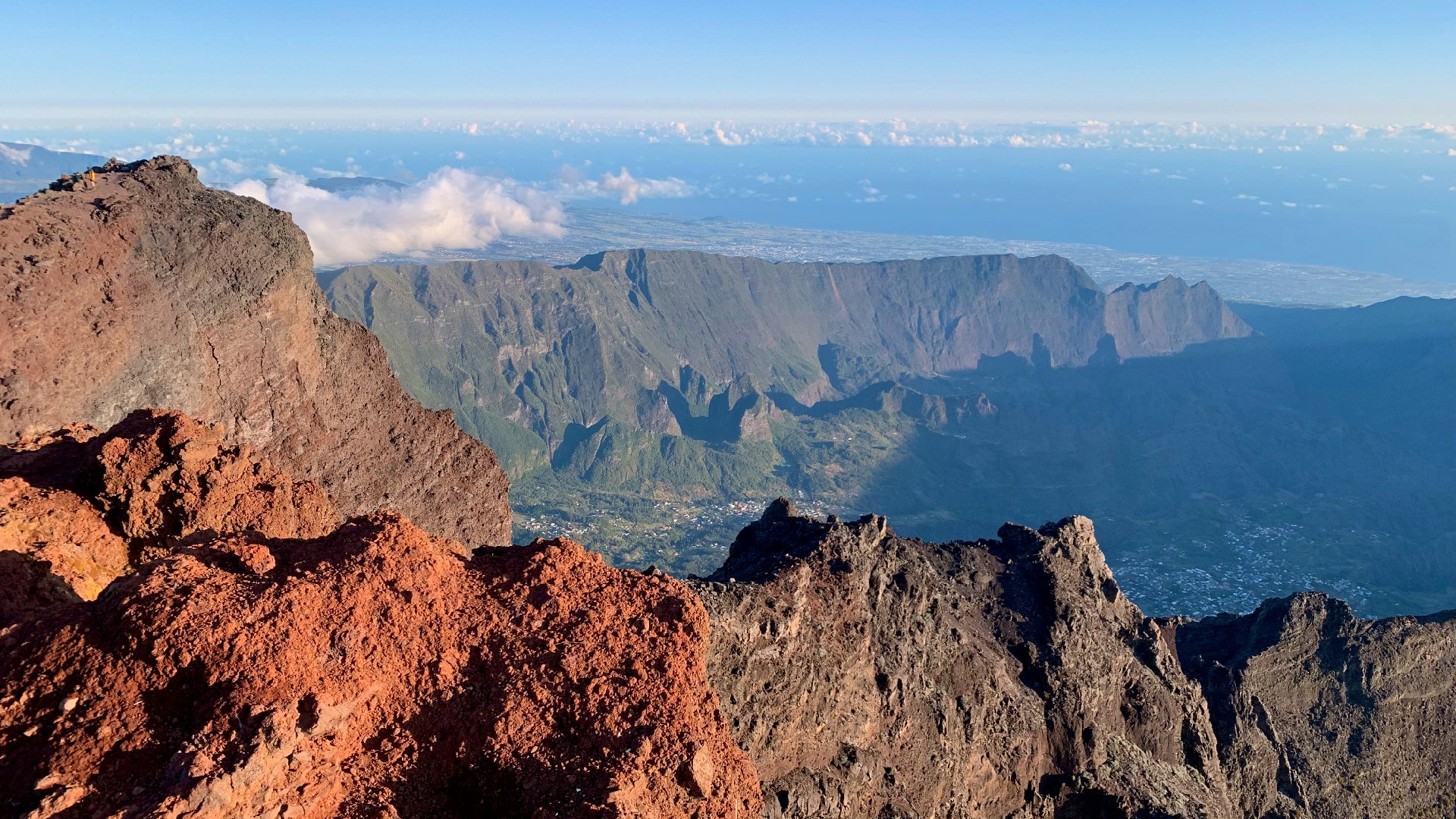
A Journey Through the Natural Wonders of Reunion Island
Reunion Island is a place where nature reveals its rawest and most striking forms. From active volcanoes to black beaches, endless chasms, and primary forests, this island offers an incredible diversity of landscapes. For those who love hiking, climbing, and immersing themselves in nature, there are several remarkable sites that promise unforgettable experiences.
Piton Maïdo: A Panoramic Vantage Point Over the Cirque de Mafate
Piton Maïdo stands as a natural vantage point at an altitude of 2,200 metres, offering a breathtaking view over one of the most remote areas on Reunion: the Cirque de Mafate. This collapsed cirque can only be explored by foot and is home to a few families living in hamlets with near-total autonomy. The climb to Piton Maïdo starts from Saint-Paul, and once you reach the summit, the panorama includes the Gros Morne, Grand Benare, the third highest peak on Reunion at 2,898 metres, the Taïbit pass, and the Piton des Neiges. After taking in the view, you can descend via a trail to La Nouvelle, the largest islet in the cirque, completing a demanding four to six-hour round trip.
Plaine des Sables: A Lunar Landscape of Mineral Desert
Located in the southern part of Reunion Island, the Volcano route leads to the Plaine des Sables, a stark and austere landscape that resembles a moon-like desert. Formed by ancient pyroclastic flows, this expanse of ochre rock, sand, and ejecta is surrounded by steep rocky ramparts. You can reach it after crossing the Pas des Sables, located at an altitude of 2,300 metres, starting from Bourg-Murat. While you can get there by car, several paths lead to surrounding craters. This site is one of the few places on the island where silence is almost total, broken only by the wind and the sound of footsteps on the crumbling rock.
Takamaka Valley: A Paradise of Waterfalls
In the eastern part of the island, above the town of Saint-Benoît, the Takamaka Valley is one of the wettest and greenest regions on Reunion. Due to its high rainfall, numerous dams and hydroelectric power stations have been built to harness the rivers and waterfalls that flow through the steep walls of the valley. A narrow road leads to several viewpoints, including the Takamaka II dam, which serves as a starting point for several hikes. One of the most impressive trails is the Grand Bras, which is best suited for experienced hikers.
Souffleur de la Pointe au Sel: A Marine Spectacle
On the south-western coast, near Saint-Leu, the Souffleur de la Pointe au Sel is a powerful blowhole that shoots jets of water into the air when the sea is rough. This natural chimney, carved into basalt rocks, faces the ocean and offers views of waves crashing against black lava cliffs. Just a few minutes’ walk from the Salt Museum, this site is also known for occasional whale sightings during August and September, making it an unforgettable experience.
Piton de la Fournaise: An Active Volcano
The Piton de la Fournaise is one of the most active volcanoes in the world and is closely monitored. Access to the site is via the Pas de Bellecombe, which overlooks the Enclos Fouqué, a large caldera leading to the main crater. The climb to the summit, at 2,632 metres, takes about five hours round-trip, depending on the state of the lava flows and local warnings. During eruptions, certain viewing points allow visitors to watch the lava fountains safely. Even without activity, the hike offers a unique journey through slag, lava tunnels, and secondary craters with multicoloured walls.
Trou de Fer: A Majestic Canyon in Salazie
In the Cirque de Salazie, the Trou de Fer is a vast 300-metre canyon that is inaccessible from the bottom. Carved by the Bras de Caverne river, this steep-sided canyon is known for its multiple waterfalls cascading down its walls. The most famous viewpoint is at the end of a trail in the Belouve primary forest, starting from the eponymous lodge. The hike is relatively easy but can be muddy, winding through lush vegetation before reaching a suspended platform.
Piton des Neiges: The Highest Peak in the Indian Ocean
At 3,071 metres, Piton des Neiges is the highest peak in the Indian Ocean. This inactive volcano has been worn down by erosion, forming a massive dome. The ascent usually begins from Le Bloc in Cilaos, with an overnight stay at the Caverne Dufour refuge. It takes about five hours to climb, followed by an early morning walk to reach the summit just in time for sunrise. From the top, the entire island stretches out in front of you, offering views of the three cirques, the distant shore, and sometimes the shadow of the piton cast on the clouds.

Post a Comment